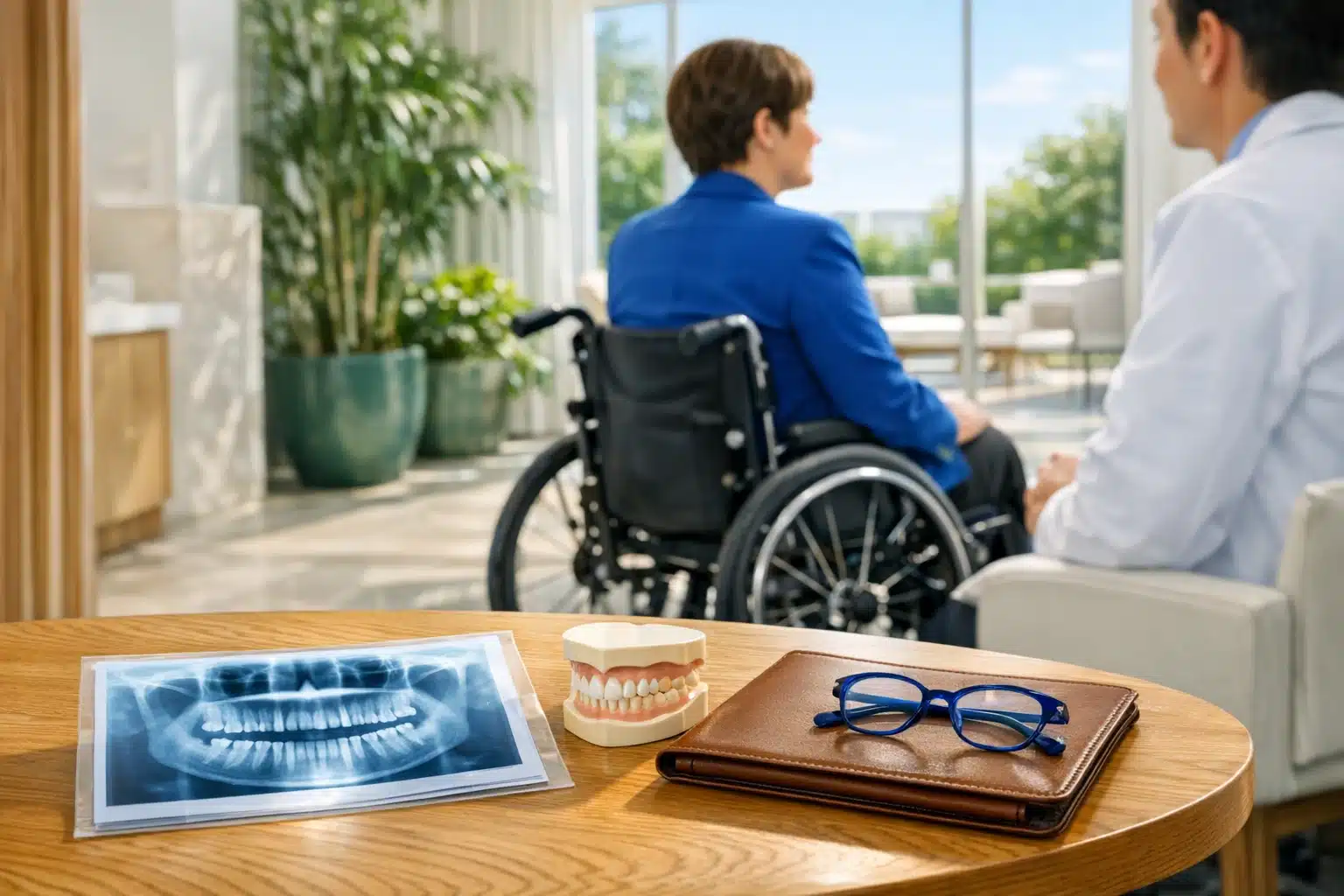
Dental Implants for Disabled Individuals in 2026
Replacing missing teeth is never just about appearance. For many disabled individuals, it can shape nutrition, speech, comfort, confidence, and even the ability to manage other health conditions. In 2026, dental implants remain a valuable option, yet the path to getting them is rarely simple because medical needs, accessibility barriers, and cost often collide at the same time. This guide maps that path clearly, from candidacy and accommodations to grants, public benefits, and practical steps that can improve the odds of approval.
Outline:
• why dental implants matter for disabled individuals and how they compare with other tooth replacement options
• how dentists evaluate candidacy, risk factors, and accessibility needs
• where costs come from and which insurance, public, nonprofit, and savings resources may help in 2026
• what documents and strategies can improve the chance of qualifying for grants or assistance
• what patients, families, and caregivers can do next to move from confusion to a workable plan
Why Dental Implants Matter for Disabled Individuals in 2026
For disabled individuals, the conversation about dental implants is often larger than dentistry. It reaches into daily eating, medication routines, communication, self-image, and independence. A missing tooth can make chewing harder, but multiple missing teeth can change the entire rhythm of a day. Foods that are easy to prepare may become hard to tolerate. Speech can feel less clear. A denture that slips during a meal or a conversation can create stress that other people never notice. In that sense, tooth replacement is not a cosmetic side note for many patients. It can be part of a broader quality-of-life plan.
Dental implants are artificial tooth roots, usually made of titanium or another biocompatible material, that are placed in the jaw to support a crown, bridge, or denture. Their key advantage is stability. Unlike a removable denture, an implant does not rely only on suction, adhesives, or surrounding soft tissue. Compared with a traditional bridge, an implant also avoids grinding down neighboring teeth in many cases. That difference matters for patients who already have fragile enamel, limited dexterity, or trouble managing frequent appliance adjustments.
There is also a biological reason implants attract attention. After a tooth is lost, the jawbone in that area tends to shrink over time because it no longer receives the same chewing forces. An implant can help preserve bone in the treated area better than leaving the space empty. For a person who has worn a denture for years, that may influence long-term comfort and facial support. Still, implants are not automatically the right answer. Surgery, healing time, bone density, gum health, and overall medical stability all matter.
Disabled individuals often face added barriers before treatment even begins. These can include transportation problems, sensory overload in clinical settings, limited provider availability, higher rates of dry mouth from medication use, difficulties with brushing or flossing due to reduced hand function, and financial strain tied to fixed income or benefit limits. When those issues stack together, even a good treatment option can feel out of reach. That is why 2026 discussions around implants increasingly focus on access, accommodations, and funding instead of treating the procedure as a simple retail choice.
A useful comparison looks like this:
• Removable dentures are usually less expensive upfront, but they may move, need relining, and become less comfortable as bone changes.
• Fixed bridges can restore function without surgery, but they often depend on the health of adjacent teeth.
• Implants usually cost more at the start, yet they can offer better stability and bone support when the patient is a good candidate.
For many disabled adults, the real question is not whether implants are fashionable or modern. It is whether they can reliably restore function in a way that fits the person’s body, budget, and support system. That is the standard worth using.
Eligibility, Accessibility, and Clinical Fit: Who Is a Good Candidate?
One of the biggest misconceptions in this space is that disability itself disqualifies someone from getting dental implants. In reality, disability is not a single clinical category, and candidacy depends on specific health factors, oral conditions, and practical support needs. A wheelchair user may be an excellent implant candidate. A person with a neurological condition may also qualify if the mouth can be kept clean and healing can be monitored closely. On the other hand, a non-disabled patient with uncontrolled gum disease, severe smoking-related bone loss, or poorly managed diabetes may not be a strong candidate at that moment. The issue is fit, not labels.
A thorough implant evaluation usually includes a dental exam, gum assessment, imaging such as panoramic X-rays or cone beam scans, and a review of medications and medical history. Dentists often look at:
• bone volume and bone quality
• gum health and history of periodontal disease
• bite forces, including grinding or clenching
• medical conditions that affect healing
• medications such as some osteoporosis drugs, immunosuppressants, or treatments that may influence bone turnover
• the patient’s ability, or caregiver support, for cleaning around the implant
Accessibility is just as important as biology. Some patients need a wheelchair-accessible operatory, a transfer aid, a quieter room, more time for communication, or written instructions in simpler language. Others may need a caregiver present, desensitization visits before treatment, or shorter appointments because fatigue, chronic pain, or sensory sensitivity makes long procedures unrealistic. These are not side requests. They can determine whether care is successful.
There are also meaningful differences among implant treatment plans. A single implant replacing one tooth is a very different experience from full-mouth reconstruction. Some patients benefit from implant-retained dentures rather than multiple fixed crowns. An implant-supported overdenture may provide a middle path: more stability than a conventional denture, but with lower cost and less surgical complexity than a full fixed arch. For someone with limited dexterity, that balance can be practical because it improves chewing and reduces movement while still allowing easier cleaning.
Medical coordination may be needed too. A physician, neurologist, cardiologist, endocrinologist, or rehabilitation specialist may help clarify whether surgery is appropriate, how medications should be managed, and whether sedation is safe. This is especially relevant for patients with seizure disorders, movement disorders, immune compromise, or conditions that affect airway management. In some cases, hospital dentistry or a specialist environment is safer than a standard office.
What if a patient is not ready for implants now? That does not mean the conversation ends. Sometimes the plan becomes stepwise: treat gum disease first, stabilize blood sugar, improve home care tools, stop smoking, complete extractions, or add bone grafting before implant placement. Sometimes the best answer is a bridge or a well-made denture because it fits the patient’s current reality better. The most ethical treatment plan is not the most expensive one. It is the one the patient can safely complete and maintain over time.
Costs, Coverage, and Funding Paths in 2026
Money enters the picture early, and it rarely whispers. Dental implants are often expensive because the final bill is built from several separate parts rather than one simple fee. A patient may pay for the consultation, 3D imaging, extractions, bone grafting, sinus lift procedures, implant surgery, healing components, the final crown or denture attachment, anesthesia or sedation, and follow-up care. That is why two patients can both say they are “getting implants” while facing very different budgets. A straightforward single implant may be manageable for one household, while a full-arch restoration can be financially overwhelming without outside help.
For disabled individuals in 2026, the most realistic funding strategy is usually a layered one. Very few people find a single grant that covers every step. Instead, they combine insurance, public benefits, discounted care, and personal funds. Common routes to review include:
• Medicaid adult dental benefits, which vary widely by state and may cover exams, extractions, dentures, or medically necessary oral surgery more often than elective implants
• Medicare Advantage dental benefits, which may offer limited annual coverage, unlike Original Medicare, which generally does not cover routine dental implant treatment
• Veterans Affairs dental eligibility for qualifying veterans
• state vocational rehabilitation programs when dental treatment is directly tied to employability, communication, or functional participation in a work plan
• workers’ compensation, auto insurance, or injury-related claims when tooth loss is linked to a covered accident
• dental schools and residency programs, which may reduce fees while providing supervised treatment
• nonprofit and donated-care networks, which can be valuable but often have strict eligibility rules and long waiting lists
• HSA, FSA, or ABLE account funds when allowed for eligible dental expenses
It is important to be realistic about what “grant programs” usually mean in practice. Some organizations offer direct financial aid. Others do not hand out cash but connect patients to reduced-cost providers or donated care. Some charities focus on emergency relief rather than implants specifically. In many areas, extractions and dentures are easier to fund than implants because insurers and donors may classify implants as less essential, even when the patient’s daily function tells a different story.
This is where medical necessity becomes powerful. If an implant-supported option is being considered because a patient cannot tolerate a removable denture, has severe gag reflex issues, has anatomical limitations, or needs a more stable prosthesis to eat safely, the claim may be stronger than a request framed as preference alone. That does not guarantee approval, but it changes the conversation.
Because policies evolve, 2026 applicants should verify live details before relying on any source. Benefit summaries, state Medicaid manuals, plan exclusions, and nonprofit intake rules can change every year. The smartest approach is to build a funding map with actual names, dates, contacts, and estimated gaps. When the numbers are visible, the problem becomes less mysterious and more manageable.
Grant Programs, Financial Assistance, and the Steps That Help You Qualify
If implant funding feels like a maze drawn in tiny print, qualification is the part where many people lose momentum. The good news is that strong preparation can improve the odds of success, especially when a case is documented around function, health, and necessity instead of a general wish for better teeth. Whether you are applying to a nonprofit, appealing an insurance denial, or asking a state program to review a request, your file needs to tell a coherent story.
Start with the clinical foundation. Ask the treating dentist or oral surgeon for a written treatment plan that explains the diagnosis, the recommended solution, the alternatives considered, and why the preferred option fits the patient’s needs. If a removable denture is not workable, the record should say why. Maybe the patient has limited retention because of bone loss, cannot manage adhesives, has a severe gag response, experiences repeated sores, or cannot chew enough to maintain a nutritious diet. Specifics matter more than broad statements.
Helpful documentation often includes:
• X-rays or cone beam imaging reports
• periodontal findings and tooth loss history
• a detailed estimate separating surgery, prosthetics, grafting, and follow-up costs
• a letter of medical or functional necessity from the dentist or physician
• disability documentation, when the program requires it
• proof of income, benefits, or financial hardship
• prior insurance denials or explanation of benefits statements
• notes describing failed previous appliances or unsuccessful conservative treatment
Next, match the application to the purpose of the funding source. A charity serving medically fragile adults may focus on health impact. A vocational rehabilitation office may care more about whether treatment supports employment goals, communication, or workplace readiness. A dental school may prioritize clinical suitability and scheduling flexibility. A Medicaid appeal may depend on exact wording in state policy. In other words, one file does not fit every door.
There are also practical steps that improve the process:
• ask providers to use clear functional language such as chewing limitation, pain, recurrent infection, speech effect, or inability to wear a removable prosthesis
• request copies of all records early, because gathering them often takes longer than expected
• apply to multiple appropriate resources at the same time instead of waiting for one answer before starting the next
• track deadlines, names, and phone calls in a simple spreadsheet or notebook
• if denied, ask for the precise reason and whether an appeal, corrected application, or new documentation is allowed
Caregivers can play an important role here. They often notice daily barriers that never appear on a radiograph: meals taking too long, choking anxiety, lost weight, skin irritation from appliance removal, or exhaustion after repeated appointments. Those details, when shared respectfully and documented well, can turn an abstract request into a convincing picture of need.
Finally, stay cautious with promises. If a website guarantees “free implants” with little screening, slow down and verify legitimacy. Real assistance programs tend to have forms, eligibility rules, and waiting periods. The process can be frustrating, but honest pathways are usually the ones built on documentation, patience, and careful follow-through.
Conclusion for Disabled Individuals and Caregivers: A Practical Roadmap for 2026
If you are a disabled adult considering dental implants, or a family member trying to help someone get through the process, the most useful mindset is steady realism. Implants can be life-improving for the right patient, but they are not a one-click solution. They sit at the intersection of oral health, medical stability, accessibility, and finance. That can sound discouraging at first. Look closer, though, and it becomes something else: a project that can be broken into steps.
Begin with the question of fit. Is the main goal better chewing, clearer speech, more comfort, fewer denture problems, or a stronger long-term option for oral function? The answer shapes everything that follows. From there, get a complete evaluation from a dentist or specialist who is comfortable treating disabled patients and willing to discuss accommodations openly. Ask not only “Can I get implants?” but also “What version of treatment is most realistic for me?” Sometimes the best path is a single implant. Sometimes it is an implant-supported denture. Sometimes it is postponing surgery while other health issues are stabilized.
Then turn to the money with a plan instead of panic. Build a simple checklist:
• obtain a written treatment plan and itemized cost estimate
• review current insurance and public benefit documents
• ask whether any part of the treatment can be justified as medically necessary
• contact dental schools, nonprofits, disability agencies, and rehabilitation programs
• prepare income records, disability paperwork, and provider letters before applications open
• create a calendar for appeals, follow-up calls, and waiting list deadlines
This audience especially benefits from teamwork. Dentists, physicians, social workers, case managers, caregivers, and patient advocates each see a different slice of the problem. When those slices are brought together, the path becomes less lonely and usually more effective. Even a denial can provide useful information if it reveals what is missing from the file or which funding source is a poor match.
The central takeaway is simple. Do not assume implants are out of reach because the process looks complicated, and do not assume they are automatically the best answer because they sound advanced. Ask better questions, gather stronger documentation, and compare options carefully. In 2026, the people who move forward most successfully are often not the ones with perfect circumstances. They are the ones who combine good clinical advice, accessible care, and patient, organized follow-through.